Advance Care Centre For Spider Veins
What are Spider Veins?
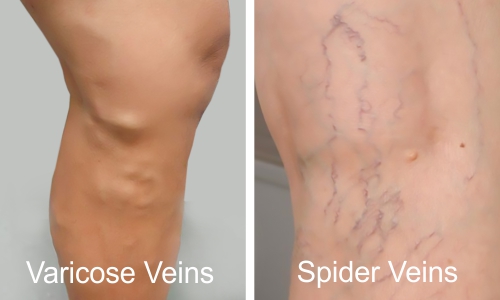
- Similar to Varicose Veins, in this case, the veins become bluish-purple or red and enlarged. The only difference is that spider veins are shorter and form a spider-like mesh in legs.
Symptoms of Spider Veins
- Inflammation in veins of the legs
- Blood flow from affected veins
- Widened veins
- Itching, burning, and pain in legs
What are the Treatment Options for Spider Veins?
There are two ways to go about treating spider veins:
- Non-operative procedures which include daily exercise, use of comfortable clothing, and avoid standing and sitting for long hours, use compression stocking to manage blood flow.
- Operative procedures which include surgeries such as:
- Subfascial endoscopic perforator surgery: Minimal access surgery and best alternative to open surgery. Process uses small incisions and ties up the affected veins using an operating scope.
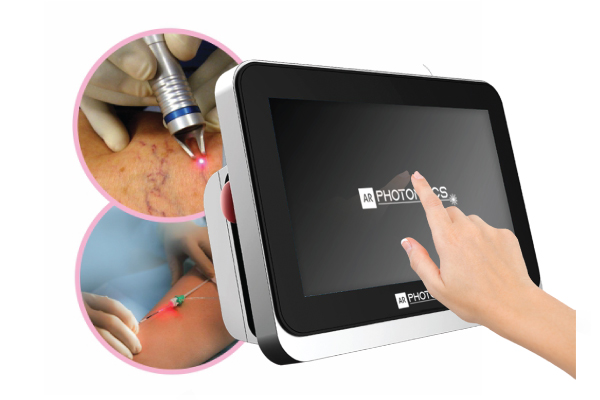
- Sclerotherapy: Useful for treating small and medium varicose veins.
- Laser Treatments: Effective in treating smaller varicose veins and spider veins.
Treating Spider Veins at Eravio
At Eravio Hospital, we have the best facilities and care for patients suffering from varicose veins. We have state of the art operation theatres to perform all kinds of surgeries, right from the simple ones to the most advanced laparoscopic surgeries.
The Eravio team consists of some of the best doctors in India who are skilled, technologically trained and at the same time compassionate and friendly towards the patients and their families.
While any superficial vein may be varicosed, but the veins most affected are those in your legs, especially if you are prone to standing for long hours. This can increase the pressure on the veins in the lower body.
Laser Treatment vs Surgery
Main Feature
- Anesthesia
- Patient Hospital Stay
- Pain (Post-Operative)
- Recovery Time
- Relapse Risk
- Complications
Laser
- Local Anesthesia /General Anastasia
- 1 Day
- Low
- 3 days
- Low
- Low
Surgical Procedure
- General Anastasia
- 3-5 Days
- High
- 7 days
- High
- High
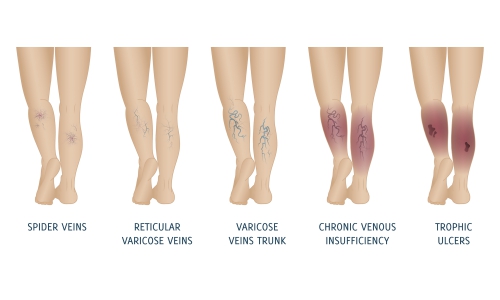
Things you should know about Spider Veins
What are the types of varicose veins and spider veins?
- Greater saphenous varicose veins.
- Lesser saphenous varicose veins.
- Branch type varicose veins.
- Genital area varicose veins.
- Reticular type or web-type (spider veins).
Causes of Spider Veins
- Hereditary
- Standing for long hours
- Excessive body weight
- Hormonal changes
- Birth control medication
- Tissue lumps
- Constipation
- Injury to skin
- Past medical complications
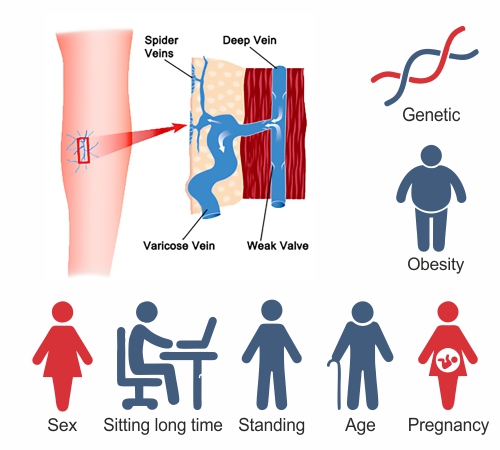
Things you should know about Spider Veins
- Inflammation in veins of the legs
- Blood flow from affected veins
- Widened veins
- Itching, burning, and pain in legs
- Greater saphenous varicose veins
- Lesser saphenous varicose veins
- Branch type varicose veins
- Genital area varicose veins
- Reticular type or web-type (spider veins)
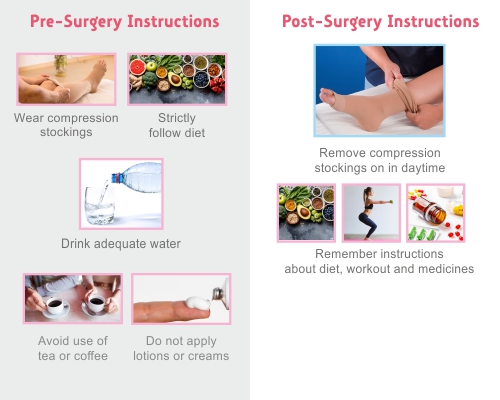
Before the surgery, perform the following actions:
- Wear compression stockings
- Follow the dietary restrictions
- Drink adequate water
- Avoid tea, coffee or other caffeinated beverages
- Refrain from applying lotions before the surgery
After the surgery, perform the following actions:
- Remove the compression stockings
- Follow the exercise and diet regiment as prescribed by the doctor
- Start swimming and hot tub bathing after consulting with the doctor
What are the precautions I should take before and after the procedure?
Before the surgery, perform the following actions:
- Wear compression stockings.
- Follow the dietary restrictions.
- Drink adequate water.
- Avoid tea, coffee and other such caffeinated beverages.
- Refrain from applying lotions before the surgery.
After the surgery, perform the following actions:
- Remove the compression stockings .
- Follow the exercise and diet regiment as prescribed by the doctor.
- Start swimming and hot tub bathing after consulting with the doctor.